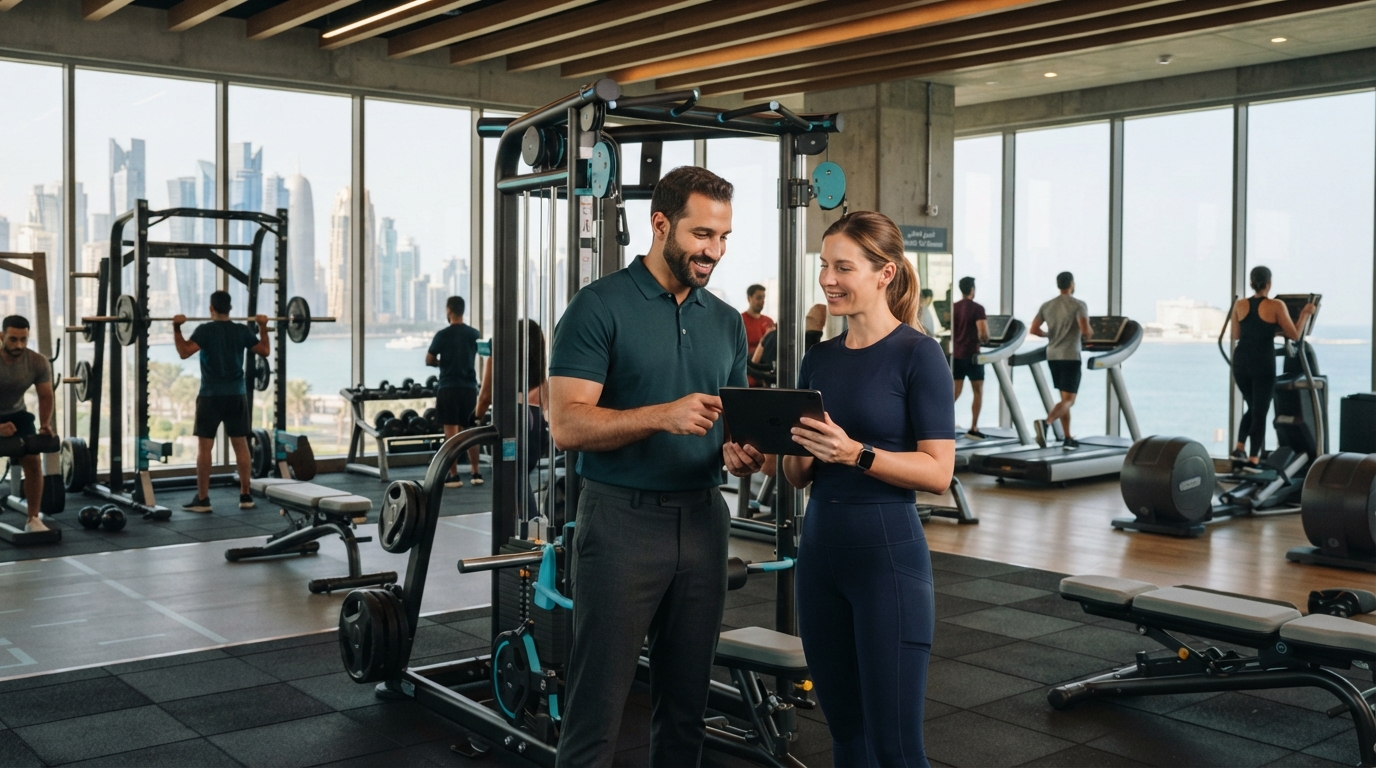
Qatar's fitness market has room for well-run clubs and no patience for badly planned ones. Here is the investment by line, the equipment budget, the membership maths and the numbers that separate a club from a closure.
Fitness in Qatar has moved from a few large chains to a market of boutique studios, ladies-only clubs, CrossFit-style boxes, padel-and-gym combinations and full-service clubs in every district. Demand is real: a young, health-conscious population, a long indoor season and employers who subsidise memberships. So is the failure rate, which is driven not by lack of members but by fit-outs that cost more than planned and membership pricing that never covered the rent. This is the business case as an experienced operator or equipment supplier would lay it out.
The investment, line by line
For a 800 to 1,200 sqm club with strength, cardio, a functional area and one studio:
- Fit-out: rubber and vinyl flooring, mirrors, ceilings, lighting, changing rooms with showers, HVAC sized for a gym (higher fresh-air rates than an office), acoustic treatment: QAR 1,800 to 3,000 per sqm, so QAR 1.5 to 3.5 million.
- Equipment: commercial-grade strength and cardio from established brands, functional rig, free weights, plates and accessories: QAR 600,000 to 1.5 million. Premium brands add 30 to 50 per cent; leasing is available and preserves cash.
- Wet areas and recovery: sauna, steam room, ice bath and a recovery lounge are now expected in mid-to-upper clubs and are strong retention tools: QAR 150,000 to 450,000 depending on scale.
- Licences and setup: commercial registration, municipality and Civil Defence approvals, signage: QAR 40,000 to 80,000.
- Systems: membership software, access control, app, CCTV, music licensing: QAR 60,000 to 150,000.
- Pre-opening: staff recruitment and visas, marketing, founder-member campaign: QAR 150,000 to 300,000.
- Working capital: six months of rent and salaries.
Total for a well-specified mid-market club: QAR 3 to 6 million. A 300 sqm boutique studio can open for QAR 800,000 to 1.5 million; a 3,000 sqm flagship with pool and courts runs QAR 15 million and above.
Membership economics
Qatar memberships broadly price at QAR 250 to 400 a month for mid-market clubs, QAR 450 to 800 for premium and boutique, and QAR 150 to 250 for budget formats; annual prepaid plans discount 15 to 25 per cent and are the operator's best friend for cash flow. A simple model:
1. Monthly fixed costs (rent, salaries, utilities, software, marketing) for the 1,000 sqm club above: QAR 220,000 to 320,000.
2. At an average realised QAR 320 a month per member, break-even sits at 700 to 1,000 active members.
3. Capacity: a club of this size runs comfortably at 1,200 to 1,800 members given typical visit frequency.
4. Churn: 3 to 5 per cent a month is normal; every member you keep is one you do not have to pay to acquire.
Personal training, small-group classes, nutrition and physio partnerships, and retail add 15 to 30 per cent to revenue at high margin. Corporate memberships with employers in the district fill the quiet daytime hours.
Equipment decisions that matter - Commercial grade only. Home-grade equipment fails within a year under club use and voids insurance.
- Local service and parts. A supplier with technicians in Qatar and a spare-parts stock keeps machines on the floor; a broken treadmill line loses members.
- Layout before purchase. A supplier who draws the floor plan, with circulation and safety clearances, saves re-ordering. Free-weight area is where members spend time; do not under-size it.
- Warranty and maintenance contract in writing, with response times, from day one.
The mistakes that close clubs
A lease at more than 25 per cent of realistic revenue; opening without a founder-member presale of at least 300 members; underpowered HVAC that makes the club unusable in August; a beautiful reception and a thin equipment budget; and no plan for the ladies' market, which in Qatar is large, loyal and under-served. Get these five right and the rest is operations.
This article is general information and not medical advice. For diagnosis and treatment, consult a licensed practitioner.