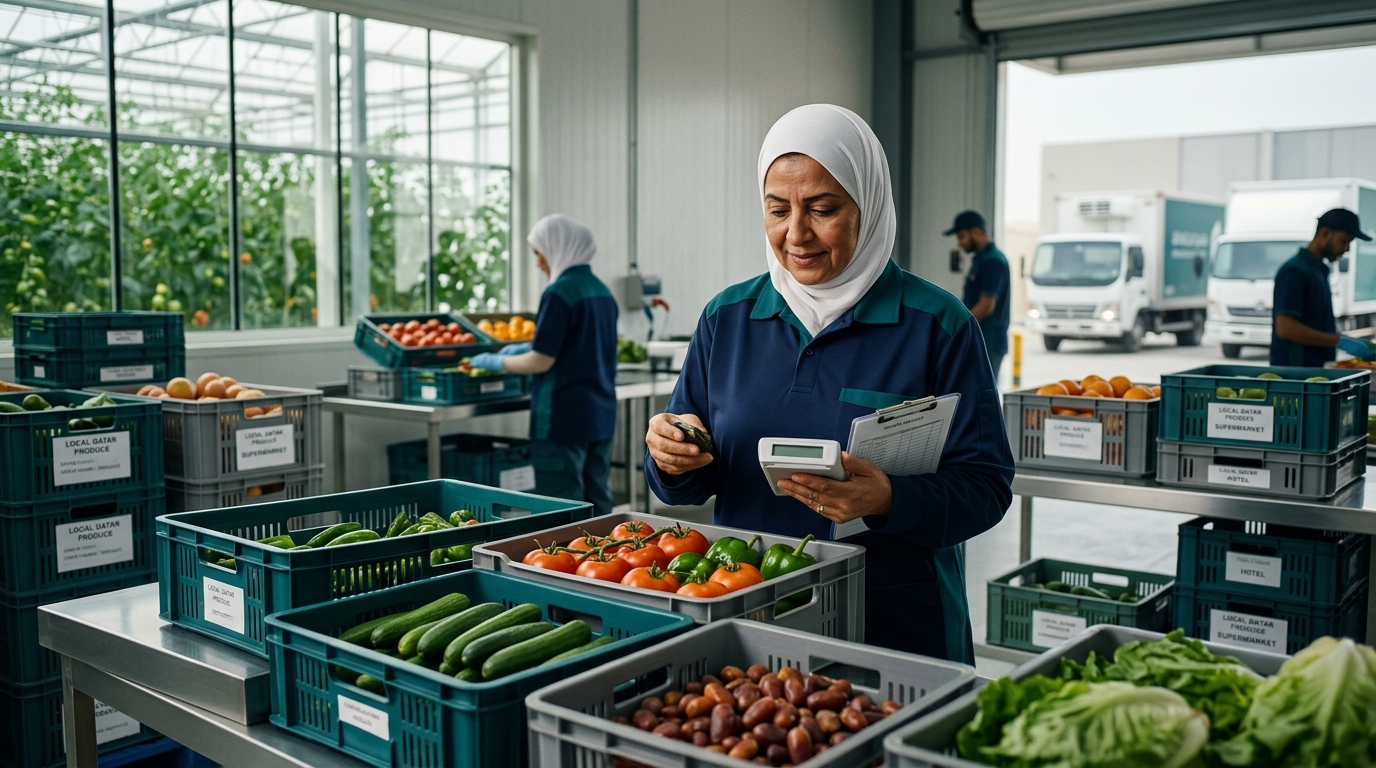
Growing good produce in Qatar is now the easy part; selling it at a margin to supermarkets and hotels is the business. Here is what buyers require, how the terms work and where the margin actually sits.
Qatar's push for food security has produced a generation of farms, dairies, poultry units and packers that can grow. Fewer of them have learned to sell. The supermarket chains and the hotel groups that buy most of the country's fresh food are professional buyers with listing procedures, standards and payment terms that a farm run by an agronomist can find baffling. The producers who thrive have treated the sales side as a second business, with its own investment and its own people.
Who buys and how
- Supermarket chains buy through category managers, list products on a supplier code, and expect daily or alternate-day delivery to distribution centres or stores, with returns for unsold or damaged stock depending on the terms. Local produce enjoys preferential treatment in season, and chains publicise their local sourcing, which makes them receptive to a well-prepared approach.
- Hotels, restaurants and caterers buy through a purchasing manager and an executive chef; they want specification consistency, reliable delivery windows (usually before 8 am) and a supplier who answers the phone at 6 am.
- Distributors and wholesalers buy in volume at lower prices and take the sales problem away; useful for surplus and for producers without a sales team.
- Institutional buyers (government catering, hospitals, universities, airlines) tender formally with strict compliance.
- Direct to consumer: subscription boxes, farm shops and the municipality produce yards; high margin, high effort.
What buyers require
1. Registration and licences: the farm or production unit registered with the Ministry of Municipality; a commercial registration for the selling entity; a municipality food licence for any packing or processing.
2. Food-safety certification: a documented food-safety system at minimum; GlobalG.A.P. for produce and HACCP or ISO 22000 for processing are increasingly requested by chains and hotel groups and open institutional tenders.
3. Traceability: batch codes on every case, harvest dates, and the ability to recall.
4. Packaging and labelling to the buyer's specification: case sizes, retail packs with barcodes, bilingual labels with origin, weight and dates.
5. Cold chain: refrigerated transport and a temperature log; produce that arrives warm is rejected at the dock.
6. Consistency: the same grade and size every delivery. Buyers forgive a price increase; they do not forgive a short delivery.
The terms
Supermarket listing typically involves a listing fee or promotional support, agreed retail and cost prices, promotional calendars with margin support from the supplier, and payment terms of 45 to 90 days. Returns or markdown sharing on perishables should be negotiated, not assumed. Hotels pay in 30 to 60 days on monthly statements; small restaurants often on delivery or weekly. Distributors pay faster and buy cheaper. A producer's cash-flow model must carry two to three months of sales as receivables; this is where many local suppliers, paid weekly at the produce yard, run into trouble when they sign their first chain contract.
Where the margin sits
For a kilo of local tomatoes in season, indicative: - Farm gate to distributor or chain: QAR 3.5 to 5.5, at a farm cost of production of QAR 2.5 to 4 in a well-run greenhouse.
- Distributor to retailer or hotel: 15 to 25 per cent added for logistics, credit and sales.
- Retail shelf: QAR 7 to 12; the retailer's gross margin on fresh produce is 25 to 40 per cent to cover waste and handling.
Premium and specialty lines (herbs, microgreens, heirloom varieties, organic-certified, ready-to-eat salads) carry two to four times the margin of commodity produce and are where local producers can win against imports on freshness. Branded retail packs earn more than loose produce and build the consumer loyalty that buyers value at listing reviews.
Building the sales side
A sales manager who knows the chains' buyers, a packhouse that can sort, pack and label to specification, a refrigerated van or a contract with a cold-chain carrier, an invoicing and statement process that matches each buyer's system, and a plan for surplus (distributors, the yards, processing into sauces or juices). Producers that make this investment typically move from selling 100 per cent through the yards at spot prices to 60 to 80 per cent under contract, and the stability changes what the bank will lend them.